
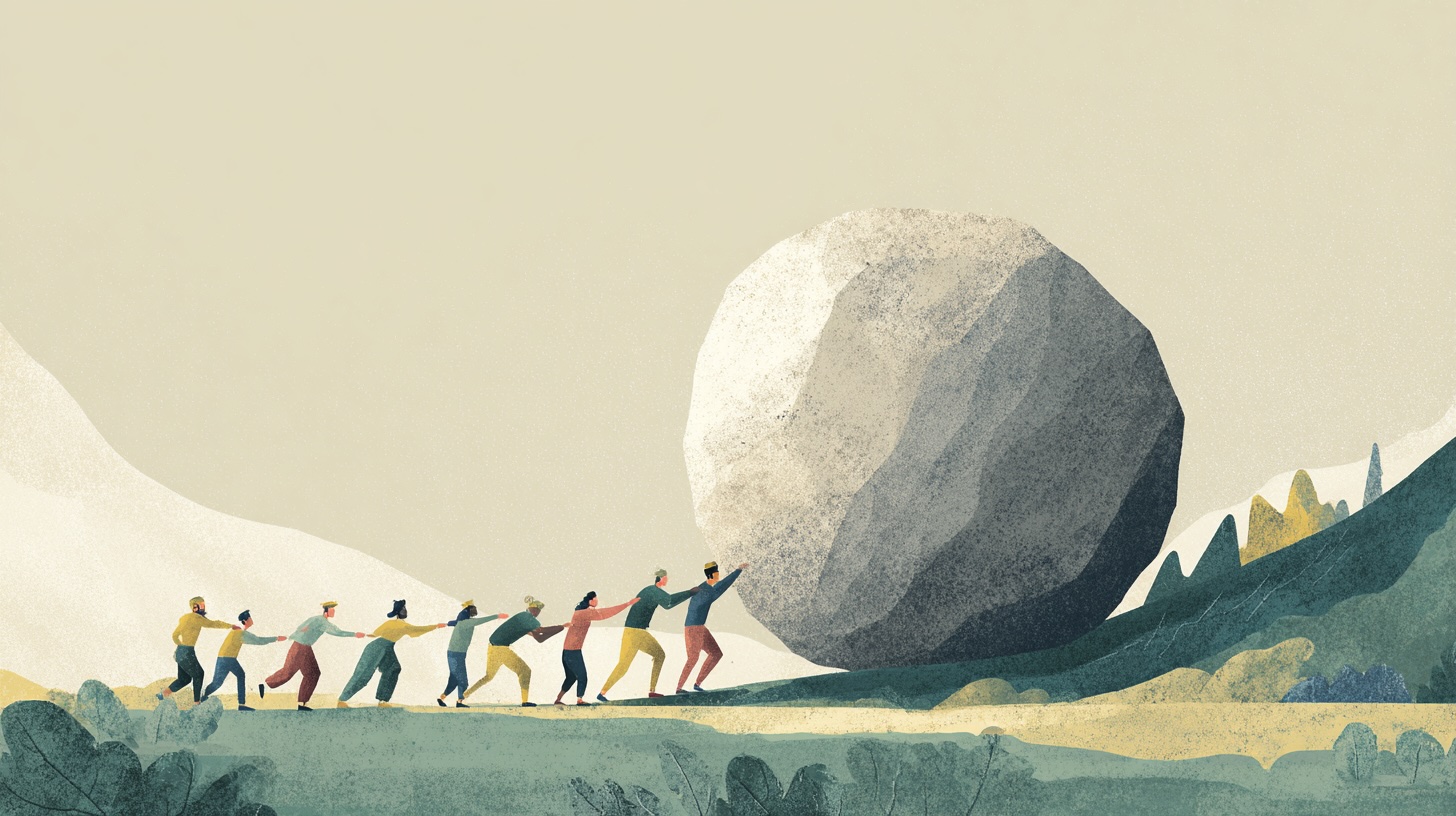
Work has always been complex. What’s changed is the velocity and the interdependence. Decisions pile up faster than one leader can process, and work now cuts across products, functions, and geographies. In that reality, ‘hero leadership’, which is the traditional hub-and-spoke model where the manager is the primary node for decisions, feedback, and maintaining team energy, becomes a bottleneck. It concentrates judgment in one person, which slows cycle time and hides problems that teams could surface sooner. The better operating system is ‘teamship’, where leadership behaviors are shared so the team can decide (and act) quickly and more effectively.
Executive team coach and bestselling author, Keith Ferrazzi has spent two decades helping companies make this shift. His point is blunt and practical. “Practices change behavior.” Teamship is not a slogan. It shows up when peers take on work that used to sit only with the boss. They give each other feedback, pressure test live work, and manage relationships beyond the org chart so progress does not queue behind one person. Ferrazzi’s fieldwork codifies these into repeatable ‘High-Return Practices’ teams can integrate into their day to day projects and collaborative workstreams.
“We need to ask teams to step up and meet leaders in leadership.” — Keith Ferrazzi, Founder, Chairman & CEO, Ferrazzi Greenlight
Ferrazzi suggests starting two simple habits. First, the Candor Break. Run it as a five minute agenda item in staff meetings, project reviews, or standups. The meeting lead or any team member can request it. Ask, “What are the most important questions we are not discussing?” Give people five quiet minutes to write in a shared document. Cluster the themes in the same meeting, assign owners, and capture next steps in the doc. This shifts truth telling from leader to team and replaces side conversations that often derail or sabotage decisions with visible issues and clear follow through.
Second, the Stress Test. This conversation takes the place of a report out or project update. The owner of a critical initiative gives a tight five minute brief to the core team plus a few adjacent stakeholders who influence or execute the work:
As Keith points out, the fact that a leader shows up and reports where they’re struggling opens up the mindset that other people can actually try to help. Then, working in small groups (Keith recommends three so teams can triangulate on a few critical ideas), they capture three things in a shared document:
Then the team reconvenes for a conversation. And to keep it action oriented, within 48 hours, the project lead posts a brief update in the same document with chosen actions, owners, and timing, tagging contributors to close the loop.
The Candor Break and Stress Test turn critique into a peer responsibility and build real accountability into the work. Teams that practice shared leadership this way start to look like agile organizations. They shorten surface challenges earlier, make decisions faster, and adapt more quickly because judgement is distributed across the team.
There is a human shift underneath this. Teamship replaces the myth of individual toughness with shared resilience. Energy is a team resource. Quick pulse checks such as “zero to five, where is your energy and what is draining it” give context others can act on. Ferrazzi recommends running an Energy Check-in at the start of key staff meetings or at least monthly, noting scores and support requests so the group can respond. This works only if people feel safe to speak up. Amy Edmondson’s foundational research shows that teams with higher psychological safety engage in more learning behaviors and surface risks sooner, which supports performance on complex tasks. Safety is not only a leader’s job. Every teammate has a duty of care to ask good questions, invite dissent, and respond to candor with curiosity rather than punishment.
With all of these practices, the blocker to beat is conflict avoidance. Ferrazzi calls it one of the most debilitating team behaviors because it keeps hard truths out of the room and pushes decision-making into back channels. Teamship requires a different social contract. With teamship, employees are asked to challenge ideas in service of the mission, not people. Put the real questions on the table with Candor Breaks. Ask for help early with Stress Tests so peers can help problem solve before work is delayed due to issues. And conduct Energy Checks regularly to monitor the resilience levels and across your team. Do this consistently and the team starts to create speed on purpose.
Listen to our podcast with Keith Ferrazzi, Ferrazzi Greenlight Founder, Chairman & CEO.