
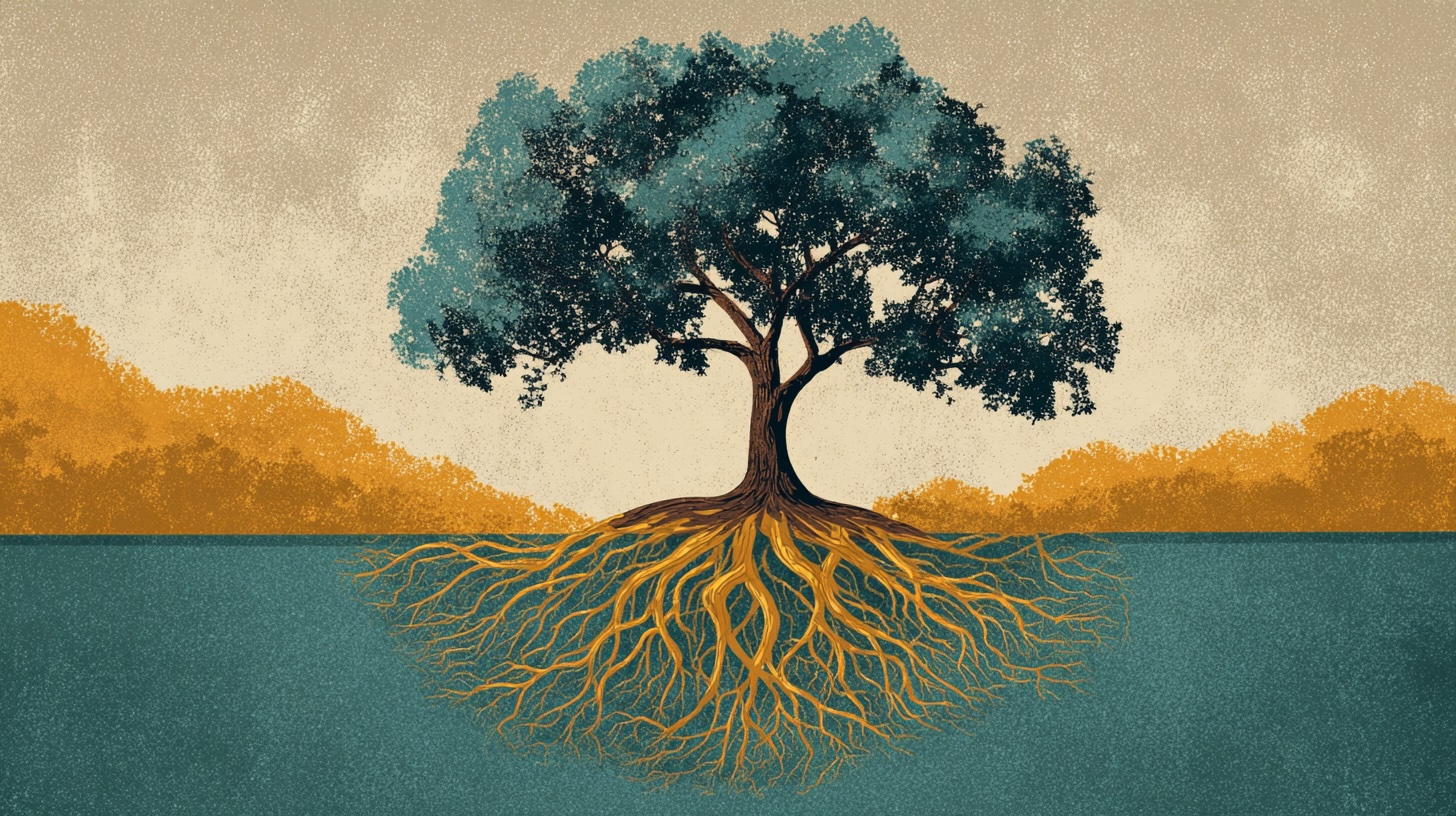
Rewiring Your Culture for Resilience

TL;DR
Your brain physically changes under chronic stress, and not for the better. Prolonged stress shrinks critical brain regions, leaving employees less capable of learning, adapting, or innovating. But here's the good news: neuroscience shows that resilience is a trainable skill, one that leaders can actively cultivate in their teams.
As Sarah Baldeo, neuroscientist and CEO of ID Quotient, told Tough Day, “the brain is neuroplastic — it can grow and change throughout life.” That means organizations can actively cultivate resilience by democratizing knowledge, fostering accountability, and embedding practices like mindfulness, continuous learning, and “neural priming” to prepare employees for change. The payoff: teams that adapt faster, think more creatively, and thrive amid disruption. Leaders who make space for well-being, learning, and psychological safety can rewire their culture for resilience.
The pace of work has outstripped the human ability to adapt. New technologies, economic volatility, and constant restructuring have left many employees in survival mode. Neuroscience helps explain why: prolonged stress activates the brain’s ancient limbic system, the fight-or-flight center, while shrinking regions tied to learning and memory. Under these conditions, people revert to instinct rather than innovation. For leaders, that’s not just a wellness issue. It’s a performance risk.
According to Sarah Baldeo, neuroscientist and CEO of ID Quotient, “the brain is neuroplastic — it can grow and change throughout life.” Resilience isn’t fixed; it’s a capacity we can train. But doing so requires shifting how organizations think about brain health, accountability, and change.
Resilience is built, not born
Everyone has the same neurological hardware: a limbic system primed for survival and a frontal cortex designed for logic, problem solving, and creativity. Resilience comes from training the brain to interrupt automatic reactions and engage that higher-order cortex. Baldeo calls this “ballistic interruption” — noticing when you’re about to “go ballistic” and redirecting toward thoughtful responses.
Neuroscience shows that even small practices can help. Mindfulness reduces stress hormone levels. Cognitive-behavioral strategies can reframe setbacks. “Neural priming” — deliberately changing routines, like rearranging your workspace or taking a new route to work — forces the brain to build new pathways, making it more adaptable. As Harvard research has shown, resilience is not a trait but a process that can be cultivated through intentional habits.
Accountability is equally important. While external shocks are inevitable, individuals control their responses. Resilience means choosing to use the tools available — whether training, coaching, or feedback — instead of staying stuck in survival mode. For organizations, democratizing access to these tools is essential. Education and knowledge-sharing are great equalizers, ensuring that resilience isn’t reserved for those with privilege or access.
What leaders can do now
Leaders often underestimate how much constant stress erodes capacity. Brain imaging studies show that people under chronic pressure are less able to learn, adapt, and innovate. In today’s climate of layoffs, rapid tech change, and AI disruption, resilience can’t be left to individuals alone. It must be embedded into the workplace. Here are some practical steps leaders can take:
- Normalize stress literacy. Teach teams how the brain responds under pressure. Understanding that “fight or flight” is biology, not weakness, creates psychological safety.
- Encourage accountability. Model ownership of reactions. Frame resilience as active problem solving, not passive coping.
- Prime for change. Offer small exercises (e.g., switching meeting formats, rotating leadership roles) that prepare our brains for larger shifts.
- Invest in continuous learning. Provide just-in-time training and microlearning so skills keep pace with change. McKinsey reports that companies with strong learning cultures are 30% more likely to be market leaders.
- Protect recovery time. Encourage downtime, rest, and mindfulness. Even short breaks restore cognitive function.
Resilience is both science and culture. It’s built neuron by neuron, habit by habit — but only if organizations create the conditions for it. “Future-proofing people is not just about upskilling,” Baldeo reminds us. “It’s teaching them the skills to navigate change.”
For Talent Leaders and CHROs, the challenge is clear: design work environments that don’t just demand resilience, but wire it into the way people think, learn, and grow.
Tuffy™ for Building Resilience
Our AI Workplace Advisor, Tuffy, acts as an ally for individuals, teams, and leaders to cultivate resilience through insights and practical support. Tuffy helps people reframe and work through challenges, learn in the flow of work, and have a sounding board that encourages reflection. For example:
- Stress Management: Tuffy can provide prompts to help employees identify their stress triggers, normalizing challenges and enabling constructive action. For instance, when an employee prompts that they’re feeling stressed, Tuffy might respond, “Feeling overwhelmed at work can really take a toll. When you feel like you're drowning, it’s so important to take small, immediate steps to ground yourself and regain some calm. A good place to start is to pause and focus on your breath. Then we can identify what’s making your workload feel so heavy such as deadlines, unclear expectations, or something else, and set an action plan to help you.”
- Cognitive Behavioral Prompts: Tuffy encourages resilience-building by guiding users to reframe setbacks. For instance, an employee may prompt “I've experienced a setback at work. Can you help me reframe this so I can move forward?” and Tuffy might respond, “I’m sorry to hear about the setback—it can really sting, but reframing it is a powerful way to keep moving forward. Think of it as a learning moment rather than a failure. Let’s explore what’s in your control and what lessons you might take from this situation. What specifically happened that feels like the setback? What do you think could be the first step toward recovery?
- Micro-Adaptive Exercises: A user might want to become more adaptive, and ask Tuffy, “Can you suggest some small neural-priming activities I can work into my day?” And Tuffy responds, “Absolutely! Neural-priming activities are great for building adaptability because they gently challenge your brain to form new pathways. Here are a few simple practices you can try:
- Change Your Routine: Rearrange your workspace or take a different commute route. These small shifts force your brain to adapt and stay flexible.
- Mindful Moments: Dedicate two minutes a day to deep breathing or body scanning. Being present helps you respond thoughtfully instead of reacting impulsively.
- Try Something New: Experiment with a small task—use a new app, cook a different recipe, or even listen to an unfamiliar genre of music. Novelty encourages curiosity and flexibility.
Your team has the capacity to adapt, they just need the right conditions to unlock it. Give them the tools, practices, and support to rewire resilience into their everyday work.
Learn more. Watch the demo
Want to dive deeper into building resilience?
Listen to our podcast with Sarah Baldeo, ID Quotient CEO

About Sarah Baldeo & ID Quotient
Recognized on Forbes Futurists' Leading Women to Watch List in 2025, Sarah Baldeo connects brain science to business challenges. She helps leaders understand how to build resilience, drive innovation, and prepare teams for the future of work, especially in the age of AI. Learn more about ID Quotient at https://www.idqinc.com.