
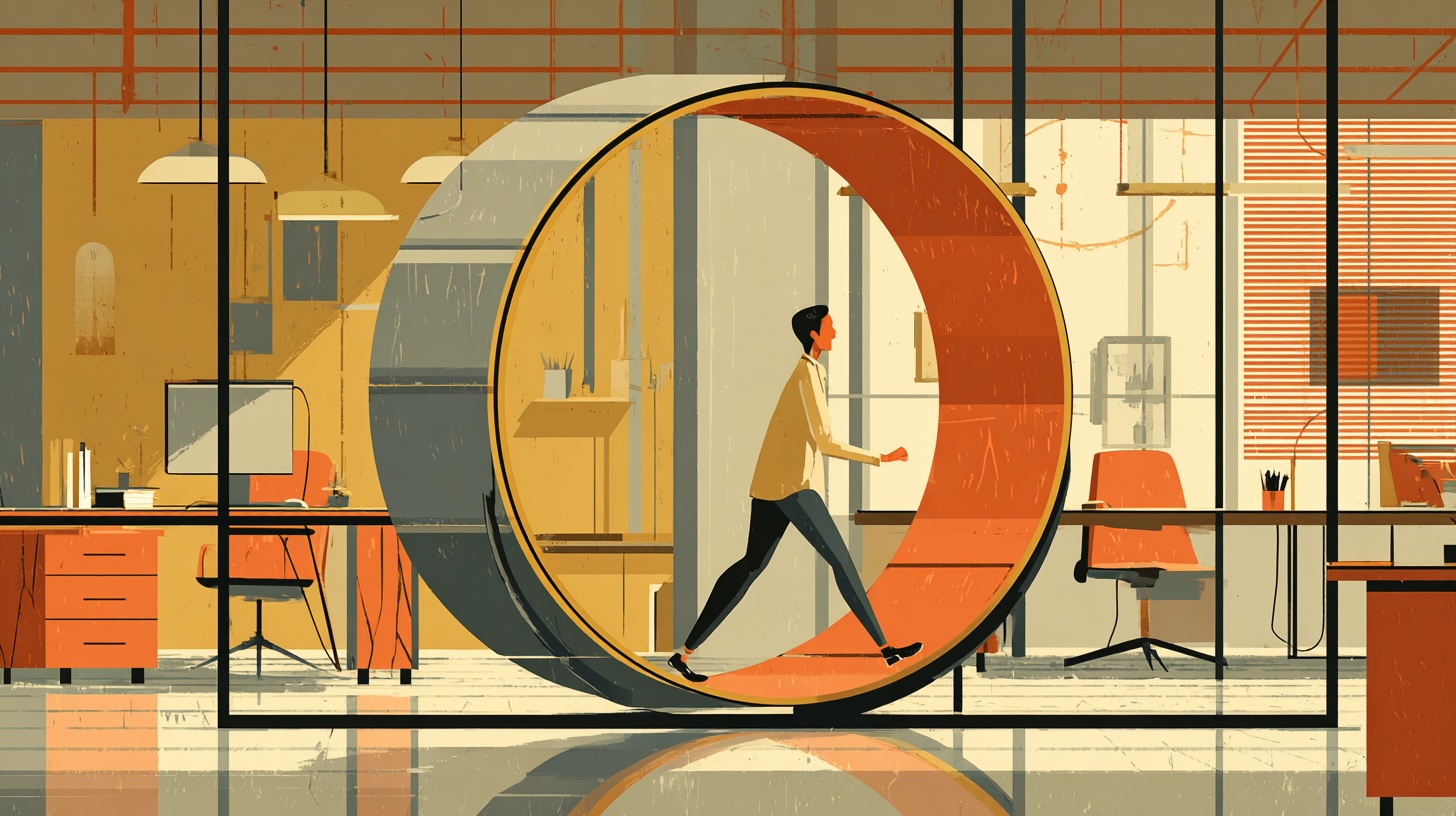
There’s a narrative gaining traction right now that AI automation is burning people out. The Wall Street Journal ran a piece about it. Here is a quick summary of the thinking: companies implement AI, automate boring/mindless tasks, see productivity jump 20%, and six months later everyone’s exhausted.
If you can believe it, a lot of companies are exploring bringing busywork back. They mistakenly credit tedious work tasks with giving people’s brains “recovery time.”
I don’t buy it.
Not because burnout isn’t real — it is. But because this framing gets the problem exactly backwards. It assumes the busywork was doing something valuable. That sorting emails and filing expense reports were secret meditation sessions. That the solution to an intensified workday is … more boring work.
That’s an old-fashioned, grin-and-bear-it work-ethic thinking dressed up as self-care.
Here’s what I think is actually happening: AI is finally revealing what has always been wrong about work, and forward-facing organizations are taking advantage of this revelation. Understanding the problem makes it possible to solve it.
What busywork was actually masking
Think about the “father of flow’s” research on Flow — the state where you’re challenged enough to be engaged, but not so overwhelmed you shut down. A cashier on day one is learning the register, meeting coworkers, navigating a new environment. It’s interesting and engaging. Three years later, same tasks, nothing really new, bored and disengaged.
The problem isn’t that we eliminated tedious work. The problem is we never replaced it with anything that actually sustains people. We didn’t build in real recovery. We didn’t recalibrate. We didn’t create conditions for innovation and growth.
When companies backfill eliminated tasks with new kinds of work, they’re making the same mistake in a different direction. They’re still optimizing for output. Still treating humans like machines with a productivity dial.
The real question AI should force us to ask
What if AI isn’t just a tool for eliminating tasks? What if it’s an opportunity to finally understand what people actually need to do their best work?
My friends at a company called Centaurian AI are doing something interesting. They noticed that AI is replacing entry-level accounting work — the grunt work that used to build foundational skills. Instead of the typical slog, they built games that teach those skills faster. The junior associates still develop the competencies. They just get to the challenging, engaging, high-value work sooner.
That’s the move. Not “keep the busywork so people can recover.” Not “pile on extra work until they burn out.” The move is to design work that enables people to do their best by unlocking creativity, innovation, and growth. That cultivates their flow state.
What actually prevents burnout
You will not prevent burnout from monotonous, tedious tasks. Self-regulation, recovery, and focus on sustainable performance are important, but you will not find them by mindlessly processing expense reports and timesheets.
Real recovery and sustainable energy come from:
Google’s 20% time wasn’t busywork. It was agency. Four-day workweeks aren’t about reducing busywork hours, they’re about trusting people to manage their energy, workload, and flow.
The companies that figure this out will use AI to compress the boring parts of the learning curve, match people to work that challenges them appropriately, and build in genuine space for recovery. They’ll treat the emotional layer — how people actually experience their jobs — as infrastructure, not afterthought.
The companies that don’t will watch their people burn out, blame AI, and wonder why “bringing back the grunt work” didn’t fix anything.
AI automation is not the problem. It reveals the problem.
Now what are you going to do about it?